
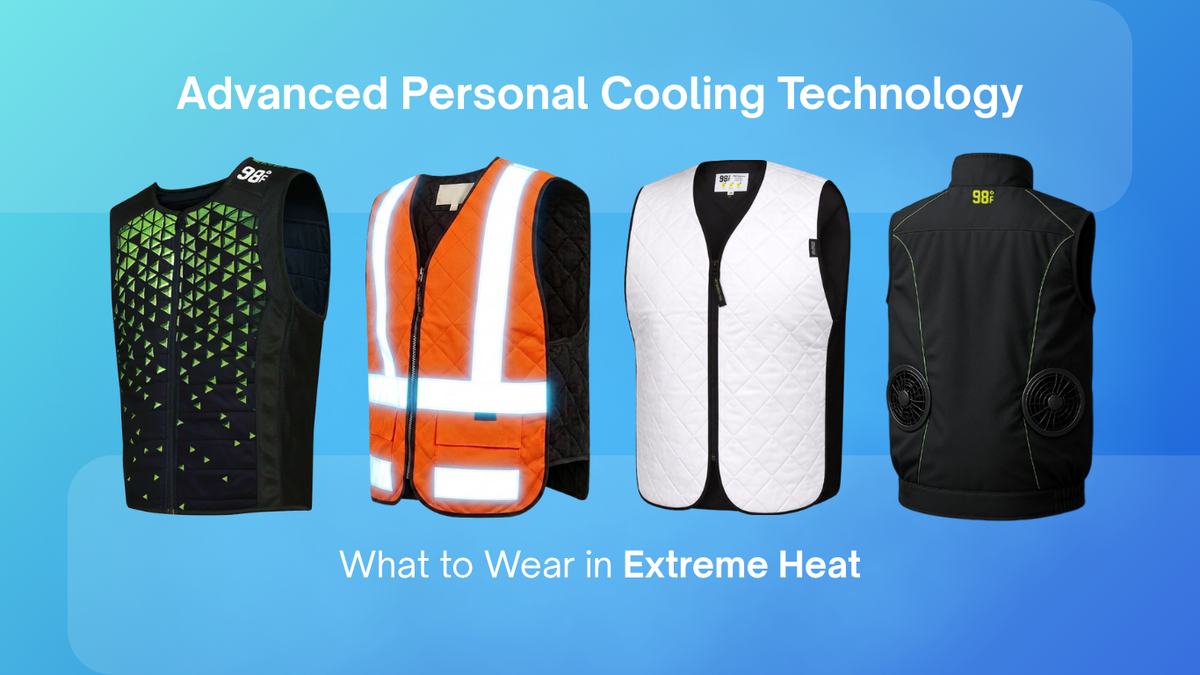

Cooling Gear: What to Wear in Extreme Heat
When temperatures climb, choosing what to wear becomes more than a question of comfort.
For outdoor workers, construction crews, warehouse teams, delivery drivers, riders, athletes, and anyone spending hours in hot conditions, the right clothing can affect how heat feels — and how easily the body can manage heat exposure.
That's where cooling gear comes in.
Cooling apparel is designed to help manage heat through different mechanisms, including evaporation, airflow, shade, and direct cooling. Depending on the environment and activity, the right combination may include a cooling vest, cooling towel, neck cooling, cooling headwear, or cooling sleeves.
But there is no single piece of cooling gear that works for everyone.
The best solution depends on where you are, how hot it is, how long you will be exposed, how hard you are working, and what other clothing or PPE you need to wear.
In this guide, we'll break down what to wear in extreme heat and how to choose cooling gear for different types of heat exposure.
What Is Cooling Gear?
Cooling gear refers to clothing, accessories, and wearable products designed to help people manage heat and improve thermal comfort in hot environments.
Unlike ordinary summer clothing, cooling gear actively uses one or more cooling mechanisms.
Common types include:
-
Cooling vests
-
Evaporative cooling apparel
-
Cooling towels
-
Cooling neckbands
-
Cooling caps and beanies
-
Cooling sleeves
-
Breathable or airflow-focused clothing
-
Phase-change cooling garments
-
Ice or cold-pack cooling systems
Some products are designed to cool a specific body area. Others cover a larger part of the body.
This creates an important concept:
Cooling doesn't have to mean cooling your entire body.
Sometimes cooling the head, neck, arms, or torso can make a noticeable difference in thermal comfort while you remain active.
Why Does What You Wear Matter in Extreme Heat?
Your clothing affects how easily your body can exchange heat with its surroundings.
In hot conditions, the body primarily relies on mechanisms such as sweating and increased blood flow to the skin to release heat.
But clothing can interfere with that process.
Heavy or poorly ventilated clothing can trap heat and moisture close to the body. Protective clothing and PPE can add another layer of insulation, making heat management even more challenging.
At the same time, simply wearing less clothing is not always an option.
Workers may need:
-
Hard hats
-
High-visibility clothing
-
Safety footwear
-
Gloves
-
Protective eyewear
-
Respiratory protection
-
Flame-resistant clothing
-
Other task-specific PPE
So the question isn't simply:
"How can I wear less?"
It is:
"How can I manage heat while wearing what my job requires?"
That is where cooling apparel can become useful.
The 5 Main Types of Cooling Gear
Different cooling products solve different problems.
Here are the main categories to consider when choosing what to wear in extreme heat.
Cooling Vests
A cooling vest is designed to cool the torso — one of the largest areas of the body.
Depending on the technology, cooling vests may use:
-
Evaporation
-
Phase-change materials (PCM)
-
Ice or cold packs
-
Liquid cooling
-
Airflow
-
Hybrid systems
When should you wear a cooling vest?
Cooling vests can be particularly useful for:
-
Construction workers
-
Warehouse workers
-
Manufacturing teams
-
Outdoor maintenance crews
-
Delivery workers
-
Motorcyclists
-
Athletes
-
Event staff
-
People working long shifts in hot conditions
A vest can also be useful when the surrounding environment cannot be cooled.
For example, you cannot air-condition a construction site.
But you can bring a cooling system closer to the worker.
Evaporative cooling vests
Evaporative cooling vests use water and evaporation to create cooling.
The basic principle is simple:
Water + airflow + evaporation = cooling.
At 98 Fahren, our Evaporative CoolVest Neo is designed around this principle.
The vest is activated with water and uses an evaporative cooling layer to help remove heat as moisture evaporates. It does not require batteries or frozen packs, making it particularly practical for situations where access to water is easier than access to refrigeration.
For workers, that can be an important practical advantage.
Cooling Towels
A cooling towel is one of the simplest pieces of cooling gear.
It is lightweight, portable, and easy to use.
Depending on the product, cooling towels can be activated with water and placed around the:
-
Neck
-
Shoulders
-
Head
-
Wrists
-
Face
The neck is particularly useful because it is an area where people often perceive heat strongly.
When are cooling towels useful?
Cooling towels are a good option when you want:
-
Portable cooling
-
A lightweight solution
-
Something easy to reactivate
-
Cooling during short breaks
-
An additional cooling layer alongside other gear
They are also easy to keep in a work bag, vehicle, toolbox, or sports kit.
For someone who doesn't want to wear a full cooling vest all day, a cooling towel can be a simple alternative or an additional layer of cooling.
Cooling Neck Gear
The neck is another practical cooling zone.
Cooling neckbands, wraps, and similar products are designed to provide localized cooling around the neck.
This can be particularly useful for people who need to keep their torso relatively unrestricted.
Cooling neck gear can work well for:
-
Outdoor workers
-
Runners
-
Cyclists
-
Motorcyclists
-
Hikers
-
Event staff
-
Delivery workers
It can also complement a cooling vest.
Think of cooling apparel as a system of cooling zones rather than one product that has to do everything.
Torso + neck
A cooling vest manages the torso.
A cooling neckband targets the neck.
Together, they can provide cooling in multiple areas without necessarily requiring a heavy full-body garment.
Cooling Headwear
Your head is exposed directly to sunlight in many outdoor environments.
A traditional hat or cap can provide shade, but cooling headwear adds another layer of heat management.
Depending on the design, cooling headwear may use:
-
Evaporative cooling
-
Moisture management
-
Ventilation
-
Reflective materials
-
Lightweight construction
Cooling beanies and caps can be especially useful for:
-
Construction workers
-
Road crews
-
Outdoor maintenance
-
Sports
-
Festivals and events
-
Hiking
-
Cycling
-
Motorcycle riding
A cooling hat does not replace a required safety helmet where a helmet is necessary.
Instead, cooling headwear should be considered within the constraints of the specific workplace and PPE requirements.
Cooling Sleeves
Your arms can be exposed to direct sunlight for hours.
Cooling sleeves can help provide:
-
Sun coverage
-
A lightweight additional layer
-
Evaporative cooling
-
Moisture management
-
Airflow
They can be useful for people who need arm coverage but don't want a heavier jacket or long-sleeve layer.
Cooling sleeves are particularly relevant for:
-
Outdoor workers
-
Construction
-
Cycling
-
Running
-
Golf
-
Road work
-
Landscaping
-
Delivery and logistics
At 98 Fahren, our cooling apparel includes airflow-focused sleeve solutions designed to support cooling during activity.
How to Choose Cooling Gear for Extreme Heat
The best cooling gear isn't necessarily the product with the strongest cooling sensation.
Instead, start with the environment.
Is the Climate Hot and Dry or Hot and Humid?
This is one of the most important questions.
Evaporative cooling depends on evaporation.
In hot, dry environments, water can evaporate relatively efficiently.
In hot, humid environments, evaporation can be slower because the air already contains more moisture.
That means the same evaporative cooling product may perform differently depending on the climate.
Air movement also matters.
Wind and airflow can help remove moisture from around the garment and support evaporation.
So consider:
Temperature + humidity + airflow
rather than temperature alone.
How Long Will You Be in the Heat?
A 30-minute run and an eight-hour work shift require different cooling strategies.
For longer exposure, consider:
-
Cooling duration
-
Reactivation
-
Access to water
-
Access to refrigeration
-
Weight
-
Mobility
-
Compatibility with workwear
-
Whether multiple cooling zones are useful
For an eight-hour shift, convenience can be just as important as the initial cooling effect.
A cooling solution that requires frequent trips to a freezer may be less practical than one that can be reactivated with water on site.
How Physically Demanding Is the Activity?
A person sitting in the shade has very different cooling requirements from someone carrying materials in direct sunlight.
Physical work increases metabolic heat production.
That means cooling gear becomes particularly relevant when heat exposure is combined with physical exertion.
Consider:
-
Workload
-
Movement
-
Shift duration
-
Break frequency
-
Clothing layers
-
PPE
-
Access to cooling areas
The more demanding the activity, the more important it becomes to think about cooling as part of a larger heat-management strategy.
What PPE Do You Need?
For many workers, PPE is non-negotiable.
Cooling gear should therefore be evaluated for compatibility with required protective equipment.
Before choosing a cooling garment, consider:
-
Does it fit under or over existing PPE?
-
Does it restrict movement?
-
Does it interfere with visibility?
-
Does it add significant weight?
-
Does it create additional layers?
-
Does it affect other safety equipment?
A cooling product should never be used in a way that compromises required protection.
The goal is to add cooling without creating a new safety problem.
Which Body Area Needs Cooling Most?
You don't necessarily need to cool everything.
Start with the area where heat exposure is most noticeable or where cooling can be incorporated most easily.
Need torso cooling?
Need neck cooling?
→ Cooling neckband or cooling towel
Need head and sun protection?
Need arm coverage?
Need portable cooling?
Need a combination?
→ Build a cooling system using multiple zones.
This is one of the advantages of modern cooling apparel: you can adapt the system to the activity rather than relying on one universal garment.
Cooling Gear for Different Types of Workers
Different jobs create different heat challenges.
Construction Workers
Construction combines heat exposure with physical exertion, PPE, direct sunlight, and long periods outdoors.
A practical cooling system may include:
Cooling vest + cooling neckwear + cooling headwear + hydration + scheduled rest
The exact combination depends on the job and PPE requirements.
Warehouse Workers
Warehouses can have significant heat buildup, particularly where ventilation or air conditioning is limited.
Workers may benefit from:
-
Cooling vests
-
Cooling towels
-
Cooling sleeves
-
Breathable workwear
-
Improved airflow
Delivery Drivers and Riders
Drivers and riders may move between hot outdoor conditions and enclosed vehicles.
Portable solutions such as:
-
Cooling vests
-
Neck cooling
-
Cooling towels
-
Cooling headwear
can be easier to integrate into a mobile work routine.
Outdoor Maintenance and Utility Workers
Workers who spend hours outdoors may need cooling that can be refreshed throughout the day.
Water-activated evaporative cooling can be particularly practical where water is readily available.
Athletes and Active People
For exercise, mobility and weight become especially important.
A cooling solution should provide useful cooling without becoming an unnecessary burden during movement.
Cooling Apparel vs. Traditional Hot-Weather Clothing
Traditional hot-weather clothing and cooling apparel aren't necessarily alternatives.
They can work together.
Traditional hot-weather clothing
Focuses primarily on:
-
Breathability
-
Lightweight construction
-
Moisture management
-
Sun protection
-
Loose fit
Cooling apparel
Adds an active cooling mechanism such as:
-
Evaporation
-
Phase-change materials
-
Conduction
-
Airflow
The best solution may combine both.
For example:
Breathable base layer + cooling vest + cooling neckwear + appropriate PPE
can create a more comprehensive approach than simply switching to a lighter shirt.
Does Cooling Gear Prevent Heat Stress?
This is an important distinction.
Cooling gear can help manage heat exposure, but it should not be considered a stand-alone method of preventing heat stress.
Heat stress prevention requires a broader approach that can include:
-
Hydration
-
Rest breaks
-
Shade
-
Acclimatization
-
Reduced heat exposure
-
Work scheduling
-
Engineering controls
-
Appropriate PPE
-
Worker training
-
Personal cooling
OSHA recommends using a hierarchy of controls to reduce occupational heat exposure, while NIOSH emphasizes acclimatization, hydration, rest, training, and environmental controls. Personal cooling can complement these measures when appropriate. (osha.gov)
Think of cooling gear as one layer in the system.
How 98 Fahren Approaches Cooling Apparel
At 98 Fahren, we don't believe one cooling product should be expected to solve every heat problem.
That's why our approach focuses on different cooling zones.
BODY
Cooling vests provide cooling around the torso.
HEAD & NECK
Cooling headwear, neckbands, and other products target areas where heat can be particularly noticeable.
ARMS
Cooling sleeves provide an additional cooling layer while maintaining arm coverage.
PORTABLE COOLING
Cooling towels offer lightweight cooling that can move with you.
The result is a range of cooling apparel designed for different environments, activities, and levels of heat exposure.
Because the question isn't simply:
"What cooling product should I buy?"
It is:
"Where do I need cooling, how much heat am I exposed to, and what can I realistically wear while doing my job?"
The Best Cooling Gear Is the Gear You Can Actually Use
The most advanced cooling technology is not useful if it doesn't fit your workday.
Before choosing cooling apparel, consider five things:
1. Environment
Hot and dry? Hot and humid? Indoor? Outdoor?
2. Activity
Light movement or heavy physical work?
3. Duration
30 minutes, two hours, or an entire shift?
4. PPE
What protective equipment must you wear?
5. Practicality
Can you activate, recharge, or reactivate the cooling system when you need it?
These questions will usually tell you more than simply looking for the product with the lowest advertised temperature.
Cooling Gear Checklist for Extreme Heat
Before heading into a hot environment, consider:
☐ Lightweight, breathable base layers
☐ Appropriate sun protection
☐ Cooling vest if torso cooling is needed
☐ Cooling towel or neckwear
☐ Cooling headwear where appropriate
☐ Cooling sleeves for arm coverage
☐ Required PPE
☐ Easy access to drinking water
☐ Regular rest and recovery opportunities
☐ A plan for reactivating your cooling gear
☐ Awareness of heat-stress symptoms
Frequently Asked Questions
What should I wear to work in extreme heat?
Wear lightweight, breathable clothing appropriate for your job and required PPE. Depending on the environment, cooling apparel such as a cooling vest, cooling towel, cooling neckwear, cooling headwear, or cooling sleeves can provide an additional layer of personal cooling.
What is the best clothing for working in hot weather?
The best clothing depends on the environment and job requirements. In general, prioritize breathable, lightweight materials and appropriate sun protection while maintaining required PPE. Cooling apparel can provide additional cooling when temperatures or physical workload increase.
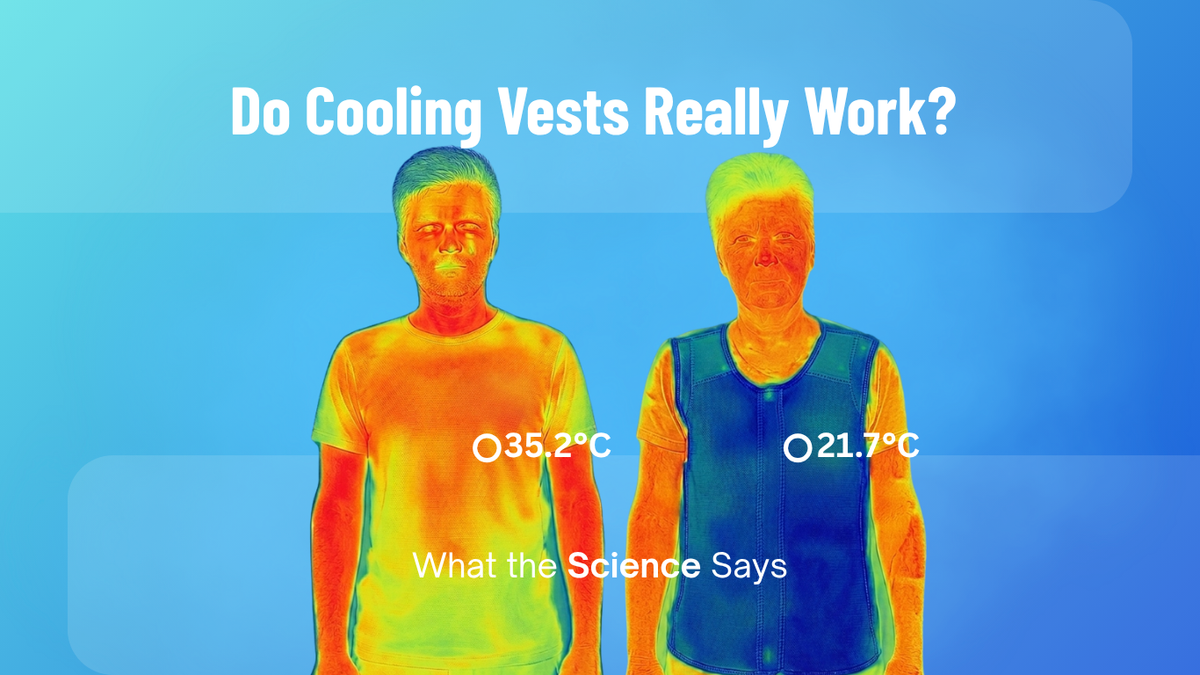
Does cooling clothing really work?
Research suggests that personal cooling garments can reduce physiological heat strain and improve thermal comfort, although effectiveness varies depending on the cooling technology, environmental conditions, workload, and clothing system.
What is the best cooling gear for construction workers?
Construction workers may benefit from a combination of cooling apparel, including cooling vests, cooling neckwear, cooling towels, and cooling headwear, alongside hydration, rest, shade, acclimatization, and appropriate PPE.
Is evaporative cooling good in humid weather?
Evaporative cooling generally works best when the surrounding air can absorb additional moisture. High humidity can reduce evaporation, which may reduce the effectiveness of evaporative cooling. Air movement can help support evaporation.
Can I wear a cooling vest under PPE?
It depends on the specific PPE and cooling vest. Always check compatibility, fit, mobility, and the manufacturer's recommendations. Cooling apparel should never interfere with required protective equipment.
How do I choose a cooling vest?
Consider the cooling technology, climate, workload, duration of use, weight, mobility, reactivation method, and compatibility with your existing clothing and PPE.
There is no single answer to the question:
"What should I wear in extreme heat?"
For some people, a breathable shirt and sun protection may be enough.
For others — especially people working or exercising for hours in demanding conditions — a more complete cooling system may make sense.
That system could include:
Cooling vest + cooling neckwear + cooling headwear + cooling sleeves + cooling towel
combined with hydration, rest, shade, acclimatization, and appropriate work practices.
At 98 Fahren, we design cooling apparel around that idea: cooling where you need it, when you need it.
Because when the temperature reaches extreme levels, the right clothing shouldn't just cover your body.
It should help you manage the heat.

Leave a comment
This site is protected by hCaptcha and the hCaptcha Privacy Policy and Terms of Service apply.