

Heat stress at work is more than an uncomfortable side effect of hot weather. For people working outdoors, in warehouses, factories, construction sites, logistics, transportation, and other demanding environments, excessive heat can affect safety, concentration, physical performance, and overall wellbeing.
The good news is that workplace heat stress can be managed.
A strong heat stress prevention plan combines environmental controls, hydration, rest, acclimatization, appropriate work practices, training, and personal cooling solutions. The goal is not simply to help workers "feel cooler." It is to reduce heat exposure and give the body better opportunities to recover during the workday.
In this guide, we'll explain what causes heat stress at work, who is most at risk, and the practical steps employers can take to create a safer and more comfortable hot-weather workplace.
What Is Heat Stress at Work?
Heat stress occurs when the body gains more heat than it can effectively lose.
Workplace heat stress can result from a combination of:
-
High air temperature
-
High humidity
-
Direct sunlight
-
Radiant heat from machinery or hot surfaces
-
Limited airflow
-
Physically demanding work
-
Dehydration
-
Heavy or protective clothing
-
Personal protective equipment (PPE)
-
Lack of acclimatization
This means that heat stress is not simply a matter of the temperature shown on a thermometer.
Two workplaces with the same air temperature can create very different levels of heat stress depending on humidity, airflow, sunlight, workload, clothing, and the amount of time workers spend exposed to the heat. NIOSH specifically recommends considering these factors rather than relying on temperature alone.
Why Is Heat Stress a Workplace Safety Issue?
When workers become overheated, the consequences can go beyond discomfort.
Heat can contribute to fatigue, dizziness, reduced concentration, dehydration, and heat-related illness. It can also create secondary workplace safety risks. For example, fatigue or dizziness can increase the likelihood of mistakes or accidents, while sweaty hands or fogged safety glasses can interfere with work. PPE itself can also increase heat load.
For employers, this means heat should be treated as a workplace safety and operational issue, not simply a seasonal inconvenience.
So, how can you prevent heat stress at work?
1. Assess the Heat Risk Before the Shift
The first step in preventing heat stress is understanding when and where workers are most exposed.
Consider:
-
Air temperature
-
Humidity
-
Direct sunlight
-
Radiant heat from equipment or surfaces
-
Air movement
-
Physical workload
-
Shift length
-
Required PPE
-
Worker experience and acclimatization
-
Time of day
Heat risk can change throughout the same shift. A job that is manageable early in the morning may become significantly more demanding in the afternoon.
For outdoor operations, employers should monitor weather conditions and use appropriate heat-stress indicators, such as the heat index or WBGT where appropriate.
But monitoring conditions is only the first step. NIOSH notes that heat index or WBGT alone should not be treated as a complete heat-stress prevention strategy.
2. Provide Water and Encourage Regular Hydration
Hydration is one of the foundations of heat-stress prevention.
Workers should have easy access to drinking water throughout their shifts and should be encouraged to drink regularly rather than waiting until they feel thirsty.
For moderate activity in moderately hot conditions, NIOSH recommends approximately one cup of water every 15–20 minutes. Individual needs can vary depending on workload and environmental conditions.
For employers, this means water should be:
-
Easily accessible
-
Available throughout the work area
-
Replenished regularly
-
Incorporated into normal work routines
Hydration should be part of the work system — not something workers are expected to manage only when they remember.
3. Schedule Regular Rest and Cooling Breaks
Rest breaks become increasingly important as heat exposure and physical workload increase.
Workers should have access to a cooler recovery area away from direct sunlight. Depending on the workplace, this could be an air-conditioned room, shaded area, cooled vehicle, or another designated recovery space.
OSHA recommends mandatory rest breaks in cooler environments and increasing recovery time as heat stress rises.
Where possible, employers can also:
-
Schedule demanding tasks during cooler parts of the day
-
Reduce continuous exposure to high heat
-
Rotate workers between hot and cooler tasks
-
Reduce unnecessary physical exertion
-
Increase recovery time during extreme conditions
The objective is simple: don't make workers stay in the heat continuously when the risk is rising.
4. Acclimatize Workers to the Heat
One of the most overlooked parts of workplace heat safety is acclimatization.
A worker who is new to a hot environment — or returning after time away — may not yet be physiologically adapted to the conditions.
NIOSH's current guidance recommends gradually increasing exposure to hot environments over approximately 7–14 days. For new workers, exposure should increase by no more than 20% per day.
This is especially important for:
-
New employees
-
Seasonal workers
-
Workers returning after an extended absence
-
Workers moving into a hotter environment
-
Employees beginning work during a sudden heat wave
A proper acclimatization plan can reduce the sudden heat load placed on the body.
5. Improve Airflow and Reduce the Heat Load
Sometimes the most effective way to prevent heat stress is to change the environment itself.
Depending on the workplace, employers can use:
-
Fans
-
Increased ventilation
-
Air conditioning
-
Local exhaust ventilation
-
Reflective barriers
-
Insulation around hot surfaces
-
Mechanical equipment to reduce manual work
-
Cooled rest areas
OSHA recommends addressing the heat source and workplace environment through engineering controls wherever possible.
For example, reducing manual material handling with conveyors or mechanical equipment can lower the physical workload and therefore reduce the amount of metabolic heat generated by workers.
6. Review PPE and Work Clothing
Protective equipment is essential in many workplaces — but it can also make heat management more difficult.
Heavy, impermeable, or poorly ventilated clothing can restrict heat loss and increase the body's heat load.
That doesn't mean workers should remove required PPE.
Instead, employers should consider whether there are heat-appropriate alternatives that maintain the necessary level of protection while improving ventilation, mobility, and comfort.
NIOSH recommends considering the additional heat load created by protective clothing and PPE as part of a workplace heat-stress program.
This is where personal cooling apparel can become another layer of a broader heat-management strategy.
7. Use Personal Cooling Solutions When Appropriate
Not every workplace can be fully air-conditioned.
Construction sites, warehouses, logistics operations, road work, manufacturing facilities, delivery routes, and outdoor worksites may require employees to spend significant amounts of time in hot environments.
In these situations, personal cooling equipment can complement environmental and work-practice controls.
OSHA identifies certain cooling devices and thermally conditioned garments as potential options for workers in extremely hot conditions.
Depending on the environment, personal cooling can include:
-
Cooling vests
-
Evaporative cooling apparel
-
Cooling towels
-
Cooling neckwear
-
Cooling headwear
-
Cooling sleeves
At 98 Fahren, this is the area we focus on.
Our approach is based on personal cooling apparel designed for people who perform in extreme heat — from industrial teams and outdoor professionals to athletes and riders.
For example, the 98 Fahren Evaporative CoolVest Neo uses water-activated evaporative cooling. It is designed to be wetted, worn, and reused, with cooling created as moisture evaporates from the cooling layer.
Other 98 Fahren products focus on different cooling zones. Our AeroFlow Cooling Sleeves, for example, use breathable mesh zones and airflow-focused construction to help reduce heat buildup during activity.
The important point is that a cooling vest or other cooling garment should complement a workplace heat-stress program — not replace water, rest, shade, acclimatization, training, or appropriate engineering controls.
8. Train Workers to Recognize Heat Stress
Even the best heat-safety program can fail if workers don't know what to look for.
Training should cover:
-
What heat stress is
-
Common signs of heat-related illness
-
How to stay hydrated
-
When to take a cooling break
-
The importance of acclimatization
-
How to use heat-protective clothing and cooling equipment
-
How to report symptoms
-
What to do if a coworker becomes ill
NIOSH recommends training both workers and supervisors and emphasizes the importance of recognizing symptoms and responding quickly.
A buddy system can also help. Workers can monitor one another for changes in behavior or signs that someone is struggling with the heat.
9. Don't Wait Until Workers Say They're Too Hot
One of the biggest mistakes employers can make is treating heat stress as a problem only after workers complain.
By the time someone says:
"I can't handle the heat anymore."
they may already be significantly affected by the conditions.
Instead, heat management should be proactive.
Before and during a hot shift, ask:
-
Is the heat risk higher than usual today?
-
Are new or returning workers properly acclimatized?
-
Is water readily available?
-
Are cooling and rest areas accessible?
-
Are breaks appropriate for the conditions?
-
Is the workload reasonable?
-
Is PPE adding unnecessary heat load?
-
Do workers have appropriate personal cooling options?
-
Do supervisors know what symptoms to watch for?
This turns heat safety from a reactive process into a workplace heat management system.
10. Build a Workplace Heat-Stress Prevention Plan
The strongest approach combines multiple layers of protection.
A practical workplace heat-stress plan should include:
Before the shift
-
Check heat and weather conditions
-
Identify high-risk tasks
-
Adjust schedules where possible
-
Confirm water availability
-
Prepare cooling and recovery areas
-
Review PPE requirements
-
Identify new or returning workers who need acclimatization
During the shift
-
Encourage regular hydration
-
Schedule appropriate rest breaks
-
Monitor workers
-
Reduce unnecessary physical exertion
-
Rotate tasks where appropriate
-
Use shade or cooled recovery areas
-
Use personal cooling solutions where appropriate
After the shift
-
Review any heat-related incidents
-
Identify tasks that caused excessive heat exposure
-
Check whether breaks and cooling measures were sufficient
-
Adjust the plan for the next hot day
Heat prevention works best when it becomes part of normal operations rather than an emergency response.
Workplace Heat Safety Is a System, Not a Single Product
There is no single product that can eliminate workplace heat stress.
A cooling vest cannot replace hydration. A fan cannot replace acclimatization. A shaded rest area cannot eliminate the heat generated by intense physical work.
The most effective approach is layered:
Reduce the heat → reduce exposure → provide hydration → provide recovery → acclimatize workers → train the team → add personal cooling where appropriate.
That is also where cooling apparel can play an important role.
At 98 Fahren, we develop cooling apparel for people who perform in extreme heat — including industrial teams, outdoor professionals, riders, and athletes. Our product range includes cooling vests, cooling towels, head and neck cooling, and airflow-focused apparel designed to help people stay more comfortable when temperatures rise.
Because working in the heat isn't always optional.
The goal is to make it safer, more manageable, and more sustainable.
Heat Stress at Work: Quick Checklist
Use this checklist when preparing your team for hot conditions:
☐ Assess the day's heat risk
☐ Provide easy access to water
☐ Schedule regular cooling and rest breaks
☐ Provide shade or a cool recovery area
☐ Acclimatize new and returning workers
☐ Adjust schedules and workloads where possible
☐ Review heat load from PPE and clothing
☐ Train workers and supervisors
☐ Establish a buddy system
☐ Consider personal cooling apparel
☐ Have an emergency response procedure
☐ Monitor conditions throughout the shift
Frequently Asked Questions
What is the best way to prevent heat stress at work?
The best approach is a combination of controls rather than a single intervention. Employers should reduce heat exposure where possible, provide water and rest breaks, acclimatize workers, train employees, and use appropriate cooling strategies.
How can employers keep outdoor workers cool?
Outdoor workers can benefit from shade, hydration, scheduled recovery breaks, adjusted work hours, acclimatization, breathable clothing, and appropriate personal cooling equipment such as cooling vests, cooling towels, and neck or head cooling products.
Do cooling vests prevent heat stress?
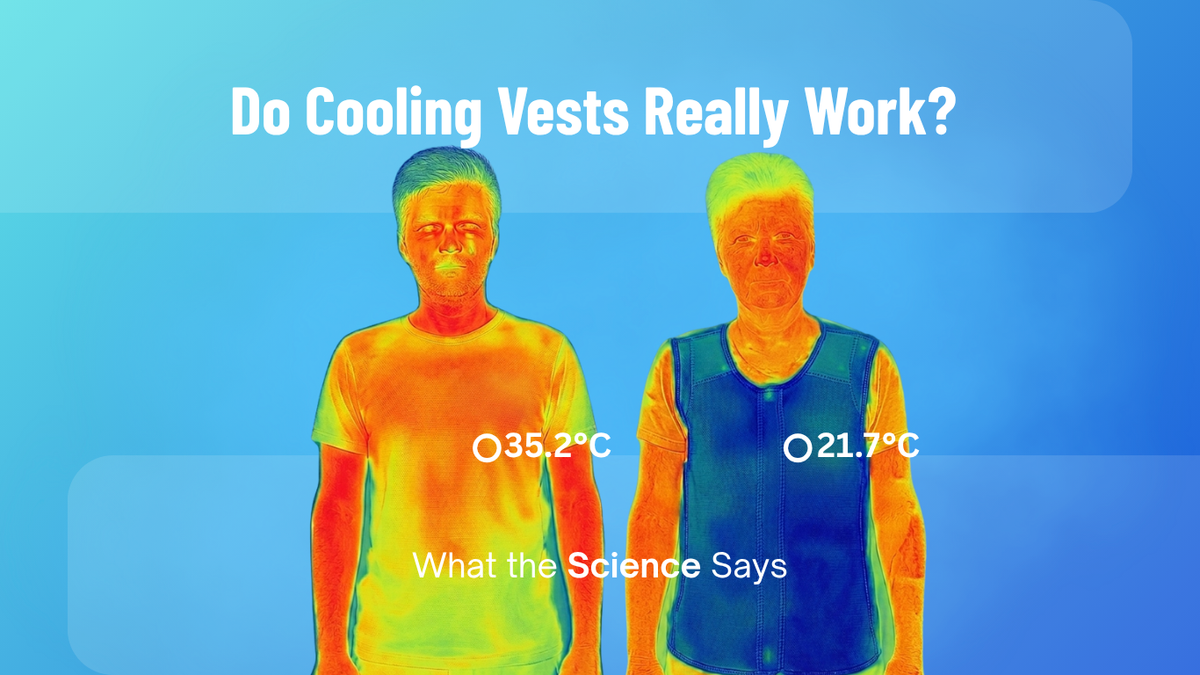
Cooling vests can be one part of a broader heat-stress prevention strategy. They should complement — not replace — hydration, rest, shade, acclimatization, appropriate work practices, and other workplace controls.
What should workers wear in extreme heat?
Where job requirements allow, breathable, lightweight clothing can help reduce heat buildup. However, workers must continue to use required PPE. When appropriate, cooling apparel can be incorporated into the workwear system to provide additional personal cooling.
How long does it take to acclimatize to working in heat?
NIOSH recommends gradually increasing exposure to hot environments over approximately 7–14 days. The exact schedule depends on whether the worker is new or already experienced with the job and heat conditions.
Who is most at risk of heat stress at work?
Both indoor and outdoor workers can experience heat stress. Risk increases with high temperature and humidity, direct sunlight, radiant heat, limited airflow, physical exertion, dehydration, lack of acclimatization, and heat-trapping PPE or clothing.
Final Takeaway
Preventing heat stress at work requires more than telling employees to drink water.
Employers need a comprehensive strategy that combines heat-risk assessment, hydration, rest, shade, acclimatization, training, appropriate work practices, PPE considerations, and personal cooling solutions.
When the environment cannot be cooled enough, bringing cooling closer to the worker can become an important additional layer of protection.
98 Fahren develops cooling apparel for people who perform in extreme heat — helping workers, professionals, riders, and athletes stay cooler when the temperature rises.


Leave a comment
This site is protected by hCaptcha and the hCaptcha Privacy Policy and Terms of Service apply.